
 Español
 Pусский
 Français
 Deutsch
 日本語
日本語 العربية
 Türk dili
 Indonesia
 中文
中文
Plastic Antistatic Masterbatch
Here is a 500-word English description of Plastic Antistatic Masterbatch, with no company name included:---Plastic Antistatic MasterbatchPlastic antistatic masterbatch is a functional additive designed to reduce or eliminate static electricity in plastic products during processing and end use. Static charge often builds up on plastic surfaces due to friction, contact, or separation between materials. This can attract dust, cause inconvenience in handling, affect product appearance, and in some cases create safety risks in sensitive environments. By incorporating antistatic masterbatch into plastic materials, manufacturers can improve surface performance, enhance usability, and meet the requirements of modern industrial applications.This masterbatch is typically made by blending antistatic agents with a carrier resin and other necessary additives. It is then processed into granules that can be easily mixed with base polymers such as polyethylene, polypropylene, polystyrene, ABS, and other thermoplastic materials. Compared with adding antistatic powder or liquid directly, masterbatch form offers better dispersion, easier handling, more accurate dosing, and improved production efficiency.Plastic antistatic masterbatch works by reducing surface resistivity and allowing static charges to dissipate more quickly. Depending on the type of antistatic agent used, it can provide either internal antistatic performance, external antistatic performance, or both. Internal antistatic agents migrate gradually to the plastic surface and offer long-lasting effect, while external antistatic agents act more quickly on the surface. This flexibility makes the product suitable for different processing and application needs.One of the main advantages of plastic antistatic masterbatch is its wide application range. It is commonly used in packaging materials, electronic component trays, industrial films, household products, automotive parts, medical packaging, and cleanroom-related items. In packaging, it helps prevent dust attraction and improves appearance. In electronics, it reduces the risk of static discharge that may damage sensitive components. In industrial settings, it improves safety and handling efficiency by minimizing static-related problems.Another benefit is that it can be customized according to specific performance requirements. Factors such as antistatic strength, duration, color, transparency, compatibility, and processing temperature can all be adjusted. This makes it suitable for both general-purpose and high-performance plastic products. In addition, antistatic masterbatch can be designed to maintain good mechanical properties of the final product without significantly affecting strength, flexibility, or appearance.During processing, antistatic masterbatch is usually added in a small proportion based on the formula requirements. It can be used in injection molding, blow molding, extrusion, and film blowing processes. Proper mixing ensures uniform distribution and stable antistatic performance. For best results, the selection of base resin, processing conditions, and final application environment should all be considered.In summary, plastic antistatic masterbatch is an essential functional material that helps plastics overcome static-related issues. It improves product performance, enhances safety, and supports cleaner and more reliable manufacturing. With its easy use, strong adaptability, and effective antistatic properties, it has become an important solution in many plastic processing industries.---If you want, I can also help rewrite this into:1. a more professional product-page style, 2. a simpler B2B marketing version, or 3. a version exactly around 500 words with SEO keywords.
Products
Category:
-
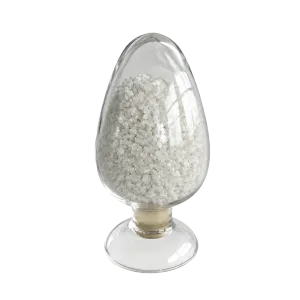
Antistatic Masterbatch
Category: Functional MasterbatchesBrowse number: 25Number:Release time: 2026-10-09 19:53:38●During the extrusion process, it is incorporated into the polymer, ensuring its homogeneous dispersion within the polymer matrix. Post-processing and molding, the antistatic agent molecules, facilitated by the segmental motion of the polymer chains, migrate to the surface. There, they adsorb moisture from the ambient air and form a uniform conductive layer, thereby neutralizing electrostatic charges. In the event that the antistatic layer on the plastic surface becomes depleted or damaged, the internal antistatic agent molecules can continuously migrate outward to replenish it. As a result, a relatively persistent antistatic effect is achieved.
●Uniform surface resistance: 10⁹~10¹⁰ Ω
●Long-lasting: The antistatic property can be maintained for more than 5 years
●Process Temperature: withstand above 300℃
●Environment: Humidity and temperature have no impact on the antistatic property
●Safety: Non-toxic on ingestion, non-irritating on skin contact, and environmentally safe.
●High Performance Adaptability: Excellent cost-performance ratio, stable with no precipitation. Retains the original properties of the material, compatible with multi-color systems, and customizable
●Applicable Resins: LDPE, LLDPE, HLDPE, PP, EPDM, EVA
News
Category:
No search results found!
Case
Category:
No search results found!
Video
Category:
No search results found!
Download
Category:
No search results found!
Job
Category:
No search results found!
Featured Products
No search results found!



 Phone
Phone