
 Español
 Pусский
 Français
 Deutsch
 日本語
日本語 العربية
 Türk dili
 Indonesia
 中文
中文
Glass Fiber PETG Filament
Glass Fiber PETG Filament is a high-performance 3D printing material designed to combine the ease of printing of PETG with the added strength and rigidity of glass fiber reinforcement. It is widely used by makers, engineers, and product developers who need parts with improved mechanical properties, better dimensional stability, and a more professional finish than standard PETG can usually provide.PETG, short for polyethylene terephthalate glycol, is already known for its excellent balance of toughness, impact resistance, and ease of use. When glass fibers are added to the material, the filament becomes significantly stiffer and more durable. This reinforcement helps reduce warping, improves layer stability, and increases the overall strength of printed parts. As a result, Glass Fiber PETG Filament is especially suitable for functional prototypes, structural components, jigs, fixtures, brackets, housings, and other parts that must perform reliably under stress.One of the key advantages of this filament is its dimensional accuracy. The glass fiber content helps the printed object retain its shape more effectively, even in larger models or parts with complex geometry. This makes it a practical choice for applications where precise fit and consistent output are important. Compared with ordinary PETG, it generally offers better resistance to deformation and can maintain structural integrity in demanding environments.In addition to performance, Glass Fiber PETG Filament is valued for its printing convenience. It is often easier to print than many other reinforced materials, making it accessible to users who want advanced material properties without the difficulty of highly technical composites. With proper print settings, it can produce smooth and stable results. A hardened nozzle is typically recommended because the glass fibers are abrasive and may wear down standard brass nozzles over time. Good bed adhesion and moderate printing temperatures also help achieve the best results.The surface finish of printed parts often has a matte, slightly textured appearance, which can give them a clean and professional look. This texture also helps hide minor layer lines and adds to the overall visual appeal of the finished model. Depending on the formulation, the filament may also provide improved heat resistance and chemical resistance compared with basic PETG, making it more versatile for real-world use.Overall, Glass Fiber PETG Filament is an excellent choice for users who need a strong, stable, and reliable printing material. It bridges the gap between easy-to-print thermoplastics and high-strength engineering filaments, offering a practical solution for both functional and aesthetic applications. Whether used in industrial prototyping or advanced hobby projects, it delivers a compelling combination of strength, precision, and ease of use.
Products
Category:
-
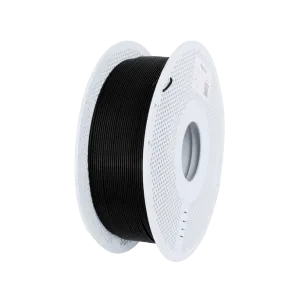
PETG 5GF Filament
Category: EngineeringBrowse number: 14Number: 1.75mmRelease time: 2026-10-09 19:56:42This 5% glass fiber-filled PETG offers enhanced rigidity and heat deflection temperature, along with low shrinkage, at a more cost-effective price point than carbon fiber variants. It delivers excellent printing stability, making it suitable for prototyping low-cost industrial brackets, housings, jigs and fixtures, and equipment bases. -
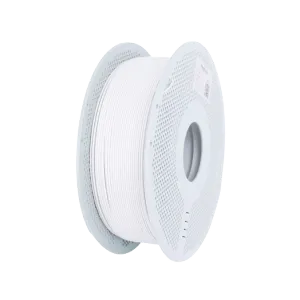
PETG 10GF Filament
Category: EngineeringBrowse number: 15Number: 1.75mmRelease time: 2026-10-09 19:56:4210% glass fiber-reinforced PETG offers superior strength and heat resistance, excellent creep resistance, and outstanding cost-performance. It features dimensional stability and resistance to deformation, making it ideal for structural equipment components, mold masters, automation tooling, and high-volume functional prototyping.
News
Category:
No search results found!
Case
Category:
No search results found!
Video
Category:
No search results found!
Download
Category:
No search results found!
Job
Category:
No search results found!
Featured Products
No search results found!



 Phone
Phone