
 Español
 Pусский
 Français
 Deutsch
 日本語
日本語 العربية
 Türk dili
 Indonesia
 中文
中文
3D Printing
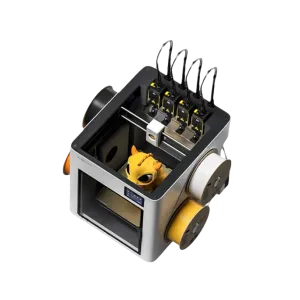
3D printing is a modern manufacturing technology that creates physical objects by building them layer by layer from a digital model. Unlike traditional subtractive methods, which remove material from a solid block, 3D printing adds material only where it is needed. This makes the process efficient, flexible, and highly suitable for producing both prototypes and final products. It has become an important tool in many industries, including education, healthcare, engineering, architecture, automotive design, and consumer goods.The process usually begins with a computer-aided design, often called a CAD model. Designers create a three-dimensional digital file that shows the shape, size, and structure of the object. This file is then converted into a format that a 3D printer can read. After that, the printer starts to produce the object layer by layer using materials such as plastic, resin, metal, ceramic, or even biological materials in advanced applications. Each layer is carefully deposited, fused, or cured until the full object is complete.One of the biggest advantages of 3D printing is customization. Because each item is made from a digital file, it is easy to change the design for different needs without retooling a factory. This is especially useful in medicine, where custom prosthetics, dental devices, and surgical models can be made for individual patients. In engineering and product development, 3D printing allows designers to test ideas quickly and make changes in a short time. This reduces development costs and shortens the time needed to bring new products to market.Another important benefit is the ability to create complex shapes that may be difficult or impossible to produce with traditional manufacturing methods. Internal structures, detailed surfaces, and lightweight forms can be made with great precision. This is valuable in industries where performance and material efficiency are essential. For example, lighter parts can help reduce energy use in transportation, while strong but intricate structures can improve function in mechanical systems.3D printing also supports sustainability in some cases. Since it uses only the material required for the object, it can reduce waste compared with conventional manufacturing. It can also support local production, which may lower transportation needs and inventory costs. However, the technology still has challenges. Printing can be slow, materials may be expensive, and the strength of some printed items may not match that of traditionally manufactured parts. In addition, not all objects are suitable for 3D printing, especially those that must be produced in very large quantities.Despite these limitations, 3D printing continues to grow rapidly and influence many areas of life. As materials improve and printers become faster and more affordable, the technology is expected to play an even greater role in the future of design and production. It represents a major shift in how things are made, offering new possibilities for creativity, innovation, and efficient manufacturing.
Products
News
Category:
No search results found!
Case
Category:
No search results found!
Video
Category:
No search results found!
Download
Category:
No search results found!
Job
Category:
No search results found!
Featured Products
No search results found!



 Phone
Phone